
Finding Springfield Residents
A Springfield name search works best when it begins with the kind of fact being checked. An address can lead to a parcel and a recorded owner. A court case number or full name can lead to a public case register. An old surname and date can lead to a directory, newspaper, probate index, or archive. Those sources answer different questions, so keep the source, date, and record type together instead of treating a single match as a complete profile.
Lane County holds much of the practical record trail because Springfield is not the county seat. County property, recording, elections, and circuit-court work is centered in Eugene. City offices remain useful for a Springfield document or request, while the library and history collections help with people who appear in older local material. A property owner may not be the person presently at an address, and some people will never appear in a public resident record.
- Start with a complete address in the county property tools when the question is tied to a place.
- Save the account number, map tax lot, and situs address from the result before switching systems.
- Use a party name, date, or document type in the recording index when a transfer or recorded action is relevant.
- Check the court, archive, or directory route that fits the time period and question.
- Ask the named custodian for a public record when the online result ends or needs confirmation.
Springfield Resident Record Offices
Three public offices form the core of a current Springfield resident-record search. The Lane County Clerk keeps real-property recordings and marriage licensing. Assessment & Taxation maintains the property-account routes. Lane County Elections is the local election custodian, while Oregon My Vote is an individual’s own registration confirmation channel. They are related sources, not one combined directory, and each has different access limits.
Lane County Clerk
Deeds & Records
125 E. 8th Ave., Eugene, OR 97401
541-682-3654
Lane Assessment & Taxation
Property accounts and maps
Use the county portal for a place-based lead.
For a city-held file, the Springfield City Recorder is the records-request coordinator and elections officer for municipal material. That route is useful for a specific city record, not a general resident roll.
Springfield Property Records by Address
The county’s Property Account Information portal gives the most direct current address path. It accepts a partial seven-digit account number, a 13- or 16-character map-tax-lot number without spaces, a situs-address search, or an owner search using Last First with no comma. A result can show the account, tax lot, taxpayer, owner, situs address, and pagination. Save the account and tax lot because those are more stable search anchors than a name alone.
| Property Account field | Verified local format |
|---|---|
| Account | Partial seven-digit account number, retaining a leading zero when applicable. |
| Map tax lot | 13- or 16-character key without hyphens or spaces. |
| Address | Use the physical situs address rather than a mailing address. |
| Owner | Enter a person as Last First without a comma; use normal word order for a business. |
See the Lane County Property Account Information portal before trying the available paths.
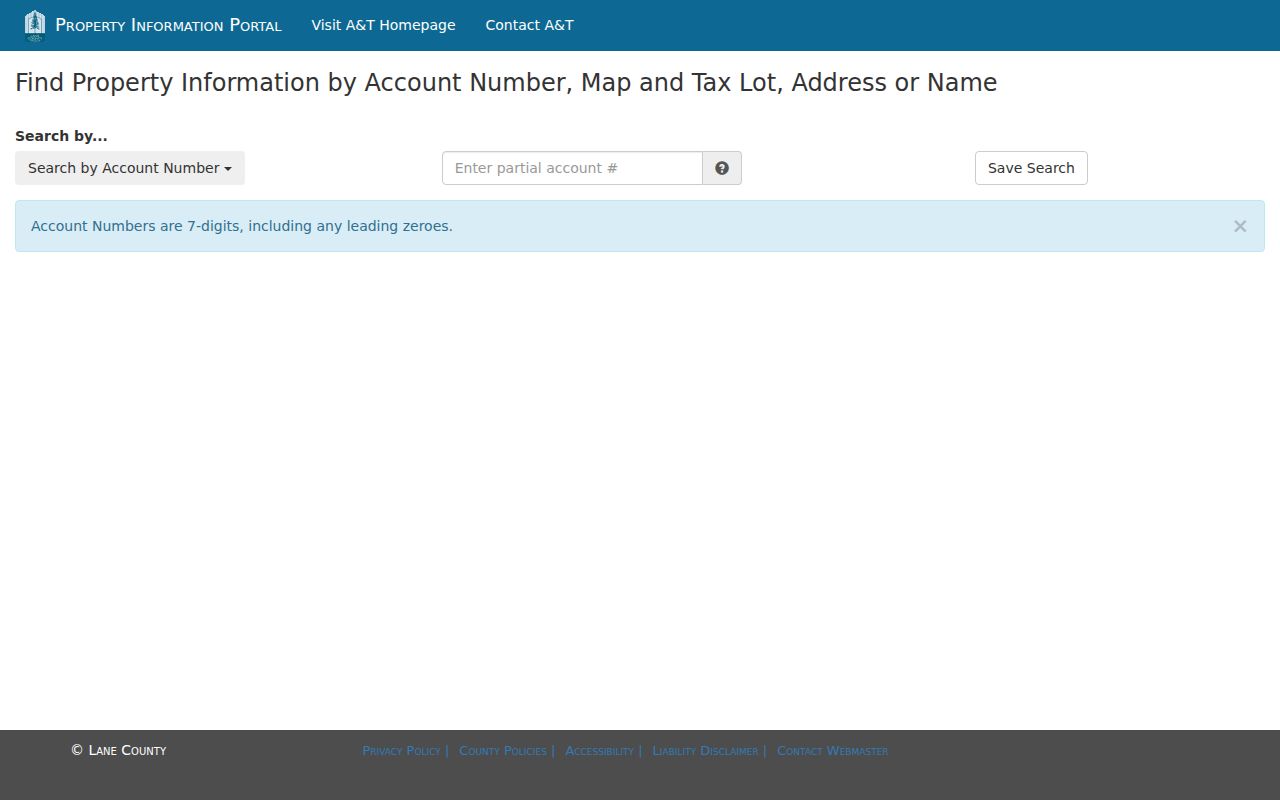
The portal separates address, owner, account, and map-tax-lot routes, which helps preserve the right parcel when a Springfield street has similar names or multiple owners.
A second county doorway, Easy Property Information Lookup, offers address suggestions after three characters and uses a 13-digit tax-lot key. Its parcel view can show sales date, deed transfer number, price, assessor code, and map overlays. These facts establish a property record trail. They do not establish every person who may be at that address.
See the Lane County Assessment & Taxation service links for the county’s property-search choices.
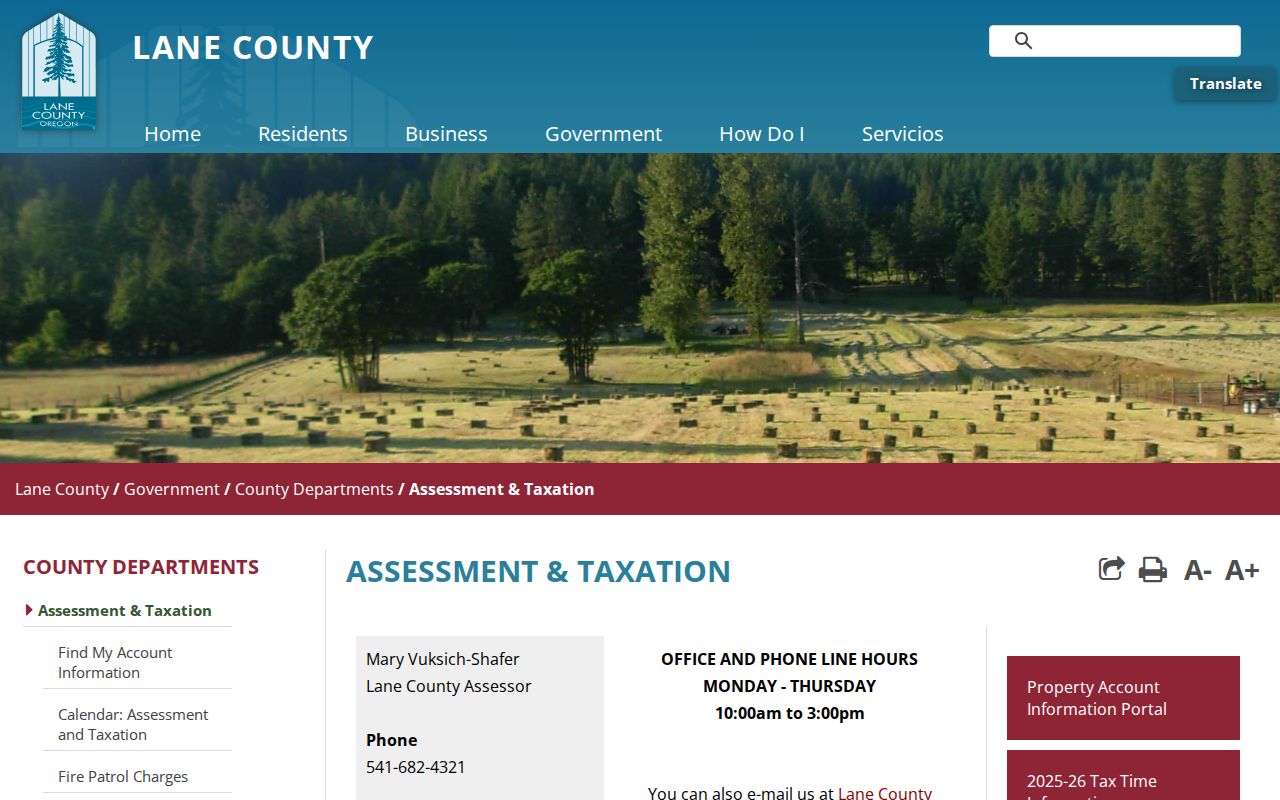
The county’s service page helps separate the account tool, sales search, tax payment, and map tools before a searcher relies on a single screen.
Springfield’s 1972 Index Break
Lane County’s recording history has two useful digital cutoffs. The official historical inventory reports computer indexing from 1972 to the present and computer images from 1994 to the present. Earlier research moves through the Deeds and Records Research Library, where older grantor-grantee indexes, deed books, and microform remain part of the record path. That split matters when an address history reaches beyond the online index.
The inventory describes Deed Book A through W and later volumes beginning in 1854. It also identifies grantor-grantee microfilm for 1902 through 1970, microfiche for 1971 through 1979, and later office indexes. This is a local records story, not a missing-record story: the county preserved older channels alongside newer online access.
Review the Oregon State Archives Lane County inventory for the relevant series and custody notes.
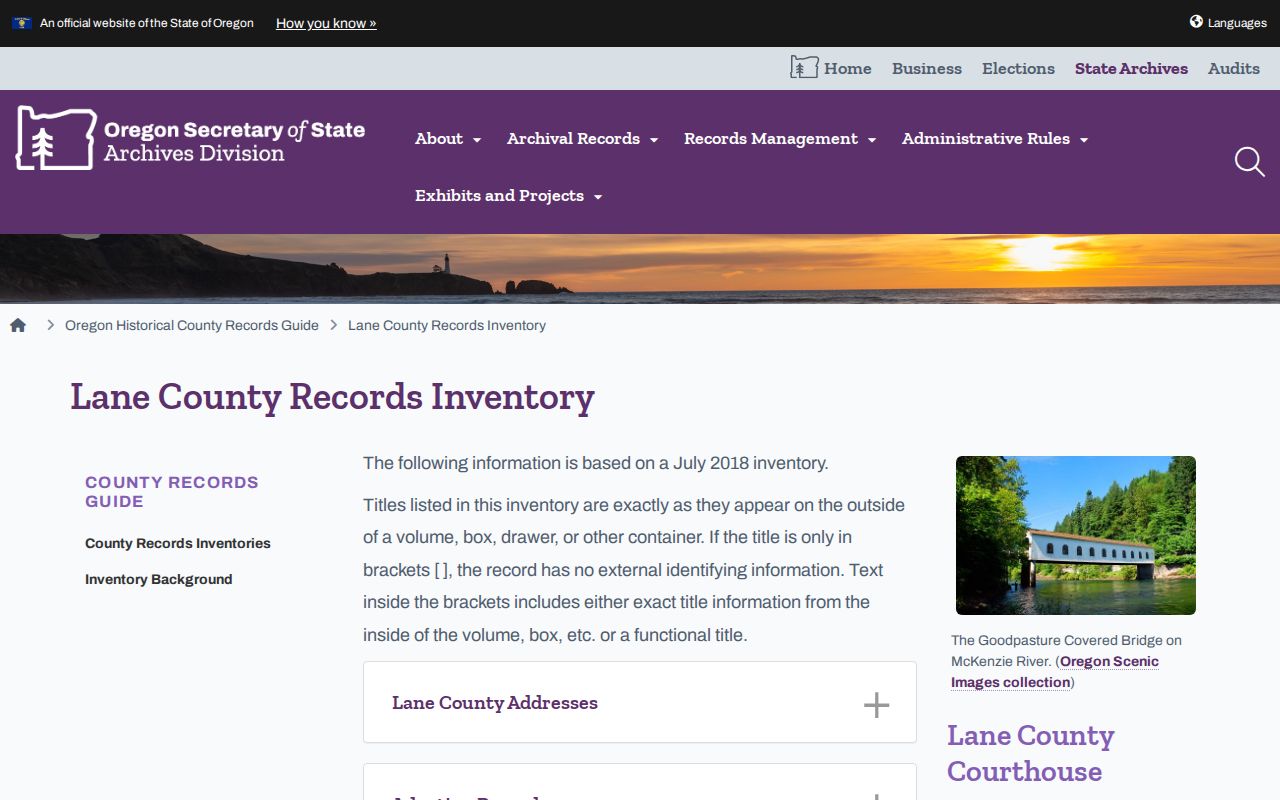
The inventory is a planning tool for the next channel, whether that is an online index, a research-library terminal, or an archival microfilm request.
Note: A dated deed party is a recorded-document fact, not proof of a person’s present address or relationship to every household member.
Current Springfield Resident Sources
There is no official all-resident list for Springfield. The useful current sources are narrower and should be read for the fact each one actually records. Property systems link an owner or tax-account record to a parcel. A recording index identifies parties to a document. Oregon My Vote is an individual verification route, while a public voter list requires the formal state or county process and excludes protected information.
| Record source | Recorded connection | Local keeper | Access route |
|---|---|---|---|
| Property account | Owner or tax-account link to a parcel | Lane Assessment & Taxation | Address, owner, account, or tax-lot portal |
| Recorded document index | Party and recorded transaction | Lane County Clerk | RLID and research-library channels |
| Individual registration check | Elector’s own registration status | Oregon elections system | Oregon My Vote |
| Formal voter-list request | Statutorily allowed list elements | Secretary of State or Lane Elections | Request, certification, fee, and exclusions |
| City public record | Specified municipal document | Springfield City Recorder | Online form, email, mail, or counter |
A name that appears in two independent records with matching date, place, or document details is more useful than a bare match. For a one-person verification path, use the Springfield resident lookup when the question shifts from a place to one individual.
Springfield Voter Record Paths
Oregon My Vote is designed for an individual to check or update that individual’s registration. It asks for a name and date of birth, rather than operating as an open name directory. A broader voter-list request follows Oregon law, certification, permitted formats, fees, and protected-address exclusions. Lane County Elections, not the City Recorder, is the local registration custodian for Springfield voters.
Open the Oregon My Vote page to see the individual confirmation route.
The screen’s personal-verification design is a reminder that a registration check and a public voter-list request are not the same service.
For the formal route, the Oregon voter-list request information explains the request fields, certification, permitted data, and fee structure. Protected voters, Address Confidentiality Program participants, and other covered records must not be reconstructed from other sources.
See the State voter-list request screen for the formal request choices and certification information.
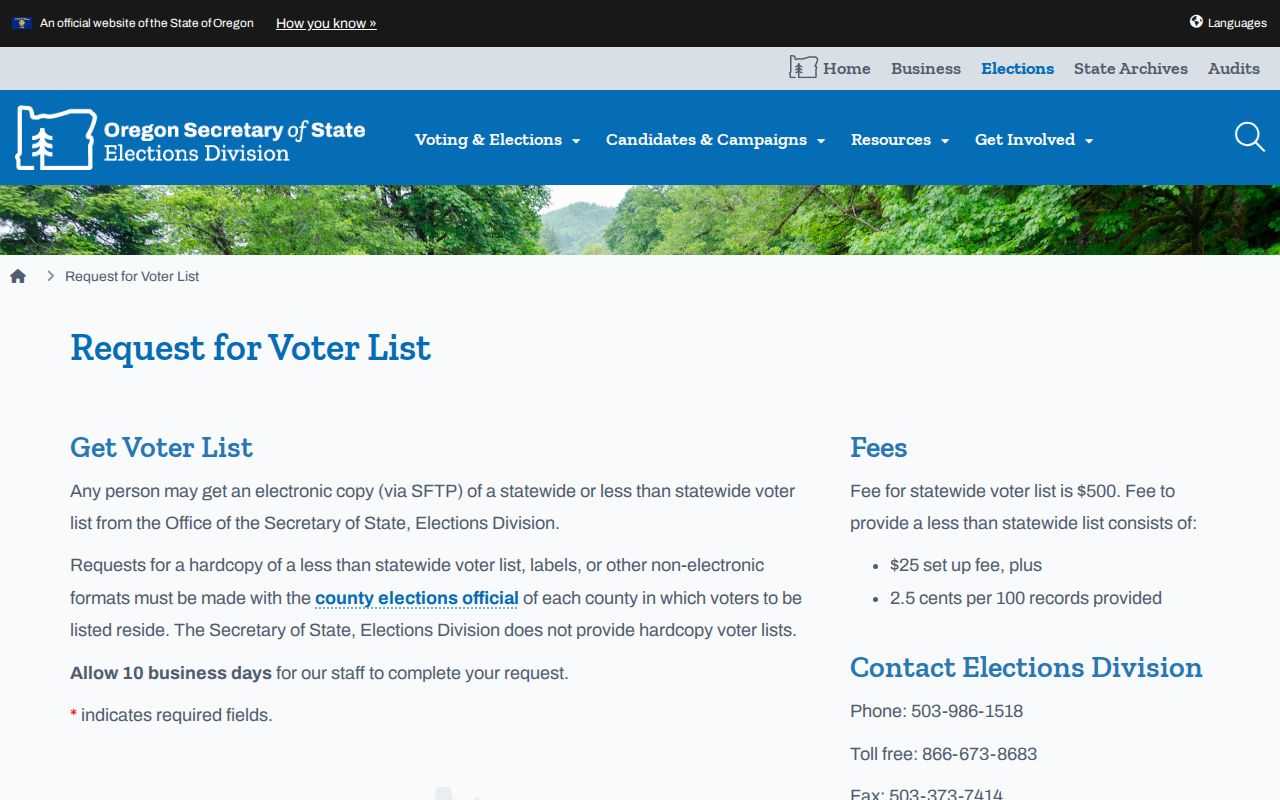
The request interface confirms that the broader list is a formal statutory channel, not an open street-by-street browser.
Note: Voter information never reveals how a person voted, and a mailing or registration fact should not be treated as a current occupancy claim.
Springfield Court Name Checks
For a public court question, Oregon Judicial Department’s free Records and Calendar Search accepts a record number or a party name in Last Name, First Name order. It provides basic public case and calendar information. The result register is an event log, not a full copy of the file, and sealed or confidential categories remain unavailable. Lane County Circuit Court serves Springfield state-court matters; Springfield Municipal Court is a separate city court.
See the OJD free Records and Calendar Search before using its name or number route.
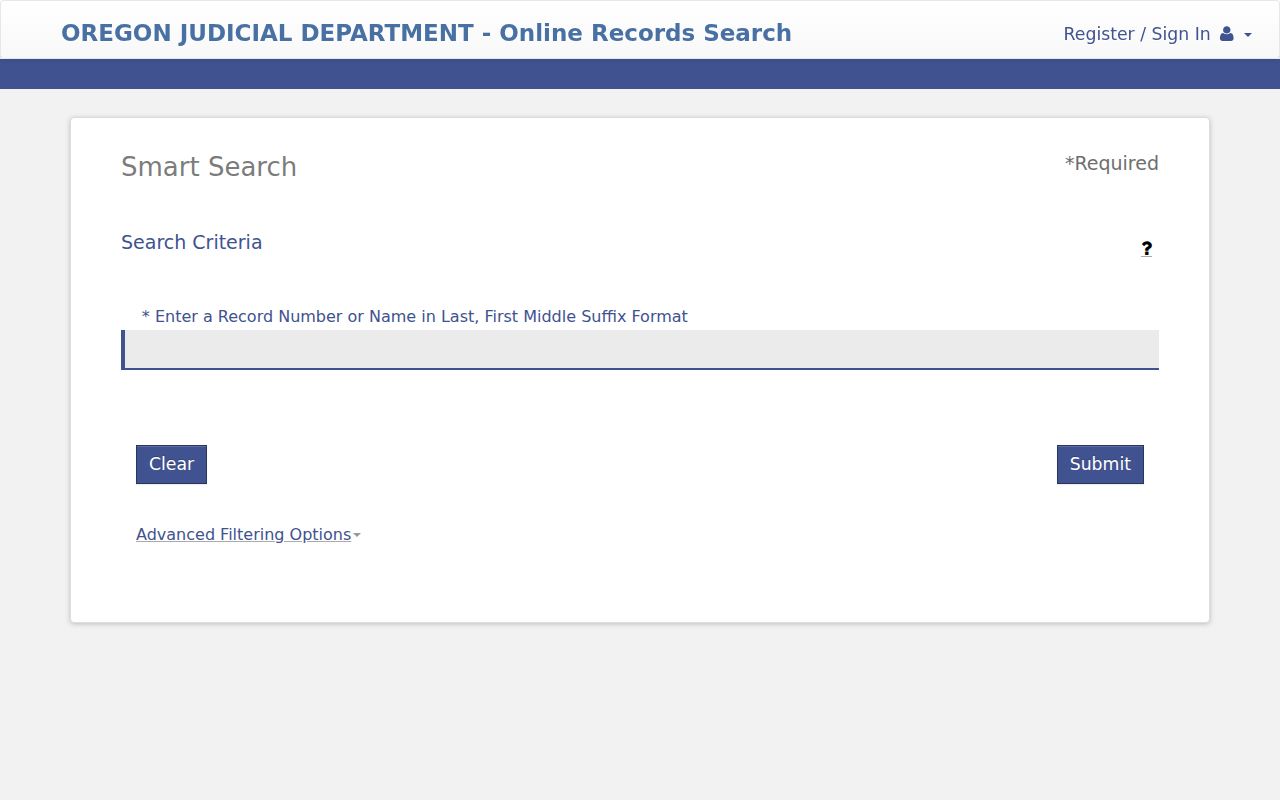
A case number, court, party spelling, and event date are the useful details to save before requesting a public copy from the court custodian.
OJD also describes its registered OJCIN Online service, courthouse public-access terminals, and specific court request procedures. Lane’s public terminal covers cases from 2014 forward; earlier material may require the circuit-court request and archival route.
Springfield Vital Record Windows
Vital records require a different question and a different access route. Oregon treats a birth as historic after 100 years and death, marriage, domestic partnership, divorce, and dissolution records as historic after 50 years, subject to the event-date rules in ORS 432.121 and ORS 432.380. Before the applicable period, a certified-copy applicant must meet eligibility and identity requirements. A marriage license is held by Lane County Deeds & Records, while a divorce decree begins with the Circuit Court.
The Oregon Vital Records start page provides online, phone, mail, drop-box, and scheduled in-person ordering channels. The State Archives is the historical counterpart, with free reference-room use of microfilm and publications plus a fee-based research service when supplied a name, event date, city, and county.
Historic Lane material includes marriage and divorce indexes, selected vital sources, and Oregon Historical Records Index results. It can lead to the named custodian, but an index result is not a certified record.
Springfield Records Request Routes
When a city record has no searchable portal, the City Recorder’s public-records form is a practical local fallback. The form asks the requester to identify the document’s nature, content, and likely department, then explain the request purpose where a conditional exemption may require balancing interests. Springfield accepts the request electronically and also by email, mail, or in person at City Hall, 225 Fifth Street. The Recorder’s phone is 541-726-3700.
See the Springfield City Recorder request page for the municipal form and contact route.
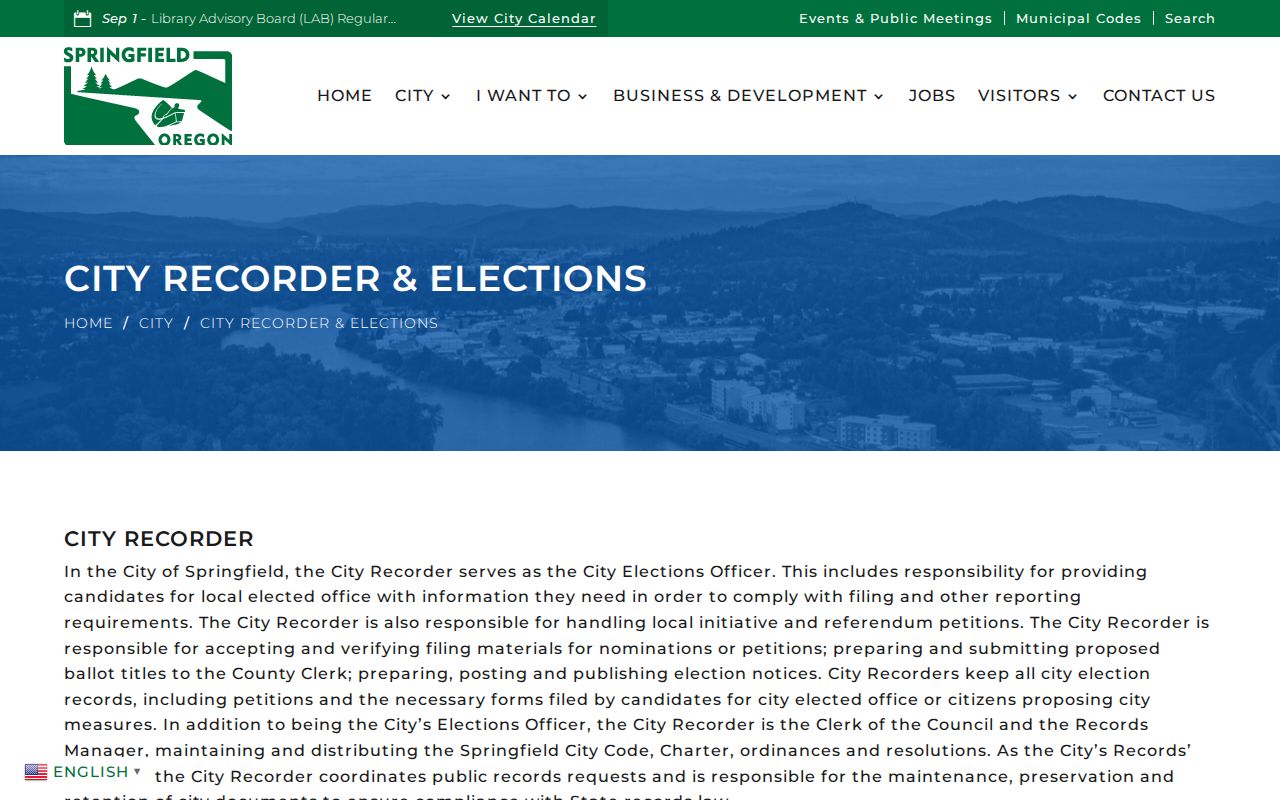
The form’s specificity prompts help direct a request to the department that holds the actual city document instead of asking for a generalized person search.
Oregon Public Records Law, ORS chapter 192, generally calls for acknowledgment or completion within five business days, followed by fulfillment or a written time estimate within ten additional business days. Exemptions and estimated costs can still apply. Lane County offers its own NextRequest and PDF channels for county records, while court and vital records remain with their separate custodians.
Note: A request should name the public body and a defined record, because a custodian cannot lawfully turn a broad request into a private whereabouts search.
Historic Springfield Resident Directories
Older Springfield names are often best checked through the library, the Oregon Genealogical Society, University of Oregon collections, and the archives. The documented directory trail begins with an 1873 Oregon business directory and includes Obenauer, Polk, Korstad, and Salisbury volumes. The 1945 Salisbury directory has a distinct Springfield section as well as street-guide and reverse-telephone sections. A volume’s date, coverage, and original page still need to be checked before an entry is transcribed.
The Springfield directory book has the fuller collection chronology and household-tracing method. A historical directory can connect a name, a street, and a date, but it cannot establish an uninterrupted address history by itself. Compare it with a released census, a newspaper item, a recorded document, or a museum file from the same period.
Lane’s earliest deeds and the city’s original 1856 plat add a local complication. An old source may use a lot and block or legal description rather than today’s formatted street address. The date of the record, rather than a modern mailing label, should guide the next search.
Springfield Library Obituary Searches
Springfield Public Library’s Local History & Genealogy guide links genealogy books, FamilySearch, MyHeritage Library Edition, newspaper access, the History Museum, Lane County History Museum, State Archives, and other local research paths. For an obituary, the library advises beginning at the date of death and looking about seven days forward on microfilm. Remote staff assistance depends on a full name, death date and place, and contact information.
The library offers Register-Guard text from 2001 forward and refers earlier work to the 1867 through 2001 archive. University of Oregon material adds Springfield Times microfilm. Use a newspaper name, street, or relative as a lead, then verify it against the dated original and a separate official or archival source.
Springfield Records Cross City Lines
Springfield’s city boundary, postal city name, ZIP Code, tax lot, and legal description are not interchangeable. USPS lists 97477 and 97478 as the standard Springfield delivery ZIP Codes. The 97475 label is an operational or facility ZIP, not a third general delivery area. Confirm a complete address with USPS, then use city or county mapping to decide whether a parcel is inside the city, in its growth area, or in county territory.
This distinction becomes especially important near Glenwood and along the Eugene-Springfield edge. City jurisdiction, postal routing, and the office that holds a dated record can differ. A property account may also show a mailing address that is not the situs address. Preserve the precise address and tax lot before drawing any local conclusion.
Limits of Springfield Resident Records
Official sources are useful because their keeper, date, and scope can be checked. A property account identifies a recorded owner or account connection. A deed index identifies a party to a transaction. A court register identifies public case events. None provides a reliable list of everyone who lives at an address, and protected voter or address-confidentiality records may not be available at all.
| Official record path | Unverified commercial compilation |
|---|---|
| Names the custodian, record date, and documented access route. | May combine old or unclear data sources without a clear original record. |
| Allows a correction question to go to the office that maintains the record. | May require a separate privacy or correction process for each displayed claim. |
| Supports a narrow, date-specific fact when read in context. | Should not replace direct confirmation with the public custodian. |
- Parcel
- A mapped piece of land identified by a county account or tax-lot key.
- Situs address
- The physical property address, which can differ from an owner’s mailing address.
- Grantor and grantee
- The indexed parties who transfer an interest in a recorded document.
- Criss-cross directory
- An address-oriented historical directory section, available only in some volumes.
Use records carefully. Springfield and Oregon sources are for lawful personal, family-history, property, or civic research. Do not use a record to stalk, threaten, harass, or harm anyone.
When a fact matters, return to the named custodian, original image, or archive. That practice protects the person being researched as well as the reader making the search.