
Springfield Resident Lookup Records
Skip the urge to assume a household list. Every Springfield resident lookup works better with a narrow question. It starts with one official record. A property account connects an owner of record to a parcel, a court register places a public party inside a case, and an archive index points to a dated historical event. Two similar names may not be one person. Weigh the record's date, the court or county named, and the identifying details side by side. Watch the addresses, too. A situs address marks the physical parcel. A mailing address is simply where the custodian sends correspondence. Neither one, standing alone, proves anyone actually lives there.
| Record | What It Confirms | Where | Access |
|---|---|---|---|
| Property or tax record | Recorded owner or account linkage for a parcel | Lane County Property Account Information | Public search; it is not a household roster. |
| Recorded deed or index | A party in a dated land transaction | RLID and Lane County Clerk records | Document history; occupancy is not established. |
| Court case register | Public party, court, case number, and events | OJD Records and Calendar Search | Free basic results; confidential categories stay closed. |
| Historic vital or probate index | A dated relationship, death, estate, or divorce lead | Oregon Historical Records Index | Index lead only; copies and newer records have rules. |
| Election record | Personal registration confirmation or a formal list request | Oregon My Vote and Lane Elections | Protected records and ballot choices are excluded. |
Identifiers are worth saving. For a parcel question, keep the account or map-tax-lot number with the result. For a court matter, keep the case number and the court. Those details make a later request to the right custodian far more precise, and they let a Springfield records office pull the exact file without guesswork.
Springfield Court Name Matches
Public state-court information starts with the free Oregon Judicial Department search. It accepts a record number or a party name. Enter names in Last Name, First Name format. Advanced options can narrow a broad result. A Springfield name may land in Lane County Circuit Court. Yet the free statewide service also reaches Oregon circuit courts, the Tax Court, the Court of Appeals, and the Supreme Court. Match the court, the date, and the case number. Do this before deciding a result belongs to the person you are tracing. The OJD Records and Calendar Search screen is the free starting point for any Springfield resident lookup. It covers any lookup that involves a public case.
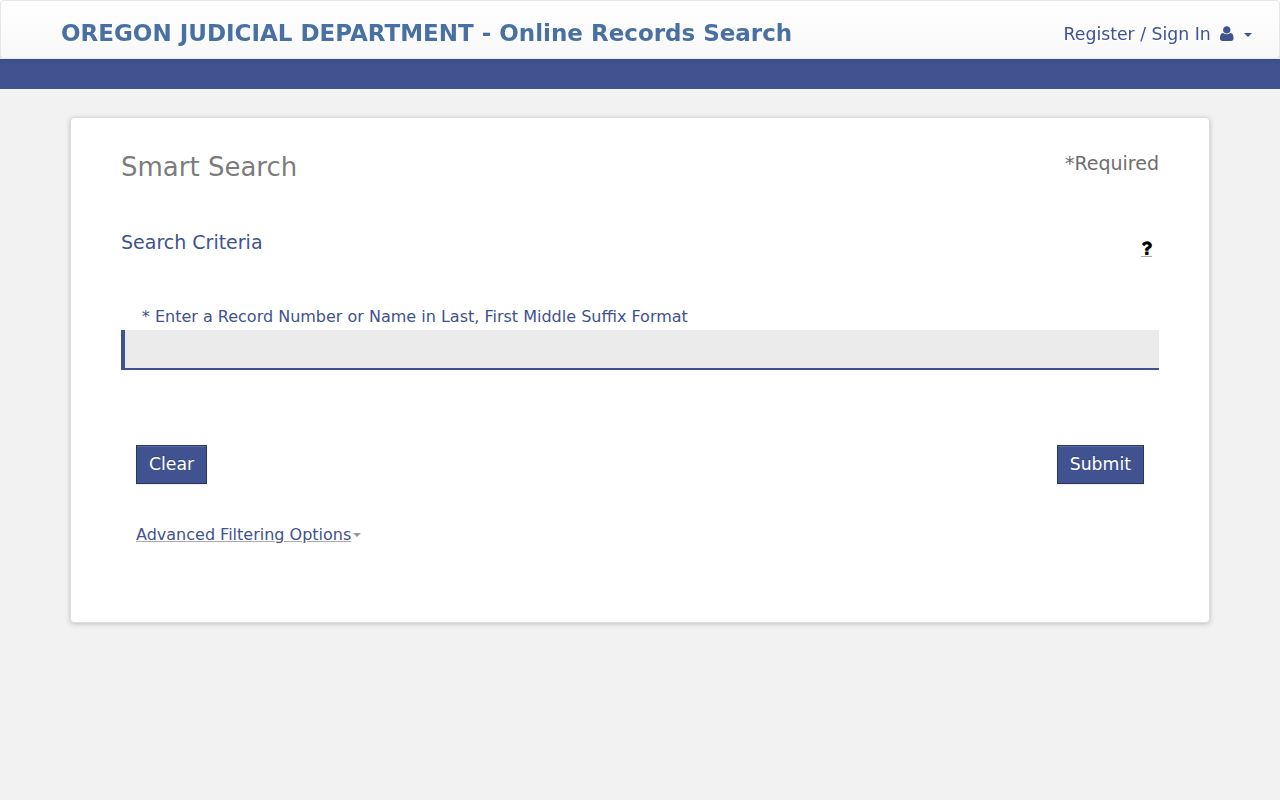
The search returns basic public case and calendar information. It does not hand over every filed document. That distinction matters for anyone using court records alongside a Springfield street directory, since the result screen is only an index to the file, not the file itself.
| OJD field or result | How to use it |
|---|---|
| Smart Search | Enter a record number or party name. |
| Party Name | Use Last Name, First Name order when a case number is unknown. |
| Advanced Search Options | Apply additional criteria when a common name produces several results. |
| Case navigation | Open the public case information and listed register events. |
A public case register may list the parties, a record number, the court, and public event or calendar dates. Its event log is not the underlying document file, so a Springfield resident lookup built on court records still needs the request step to see what was actually filed.
- Party identity: names returned by the party-name or record-number search.
- Record placement: the case number and court for the public matter.
- Register events: filings, hearings, notices, judgments, and reminders.
- Calendar data: public dates and scheduling information where shown.
- Restrictions: adoption, juvenile, mental-health, Violence Against Women Act, sealed, and other confidential matters remain unavailable.
Verify a Springfield Resident
Verification is a test of details, not of names alone. Start with a spelling taken from a dated record. Then compare stable facts across independent sources. A middle initial helps. A court or an event date can help too. So can a parcel legal description, a business affiliation, or a relative named in a historical source. Same-name collisions are common in a statewide record set or where a property address has changed over time. A name match by itself proves little. Ask a custodian for a copy only after the public index makes the request specific. It must also be relevant to a Springfield resident.
- Record the exact name and the date or place already supported by a reliable source.
- Check a public property result only when a parcel address is known, then retain its account and map-tax-lot identifiers.
- Search the OJD party name in the documented order and compare the court, case number, and event dates.
- Use an archive index, probate lead, or original custodian request to confirm a second independent attribute.
- Docket
- A court’s organized record of a case and its activity. A register of action is its event log.
- Index and image
- An index points to a record. An image is a scan of the record itself, which may require a different access route.
- Certified copy
- A copy issued and authenticated by the custodian for an official purpose, subject to that office’s process and fee.
Note: A date, a named custodian, and one independent matching detail make a result more reliable than a name alone.
Springfield Records Access Paths
Lane County Circuit Court offers several distinct access channels. The free OJD search provides basic public information. Paid OJCIN Online serves registered users. It covers statewide judgment dockets and registers of action. Lane's courthouse public terminal covers cases from 2014 forward. The Lane County Law Library keeps an OJIN kiosk. It can help locate a case number. For a document, archived file, or certified copy, follow the particular court's record-request process. The circuit court sits at 125 E. 8th Avenue in Eugene, phone 541-682-4020, with published hours of 8 a.m. to 5 p.m. Older Lane court records travel different paths. The archive inventory describes case-file microfilm for 1854–1953 and 1953–1983. It also lists a 1978–1982 microfiche case-number index. Springfield Municipal Court is a separate city channel. Its online-dockets page offers no usable public party-search form, so no municipal name-search capability should be assumed. No public search exists for most city material. The Springfield City Recorder public-records form is a specific-record fallback for those cases.
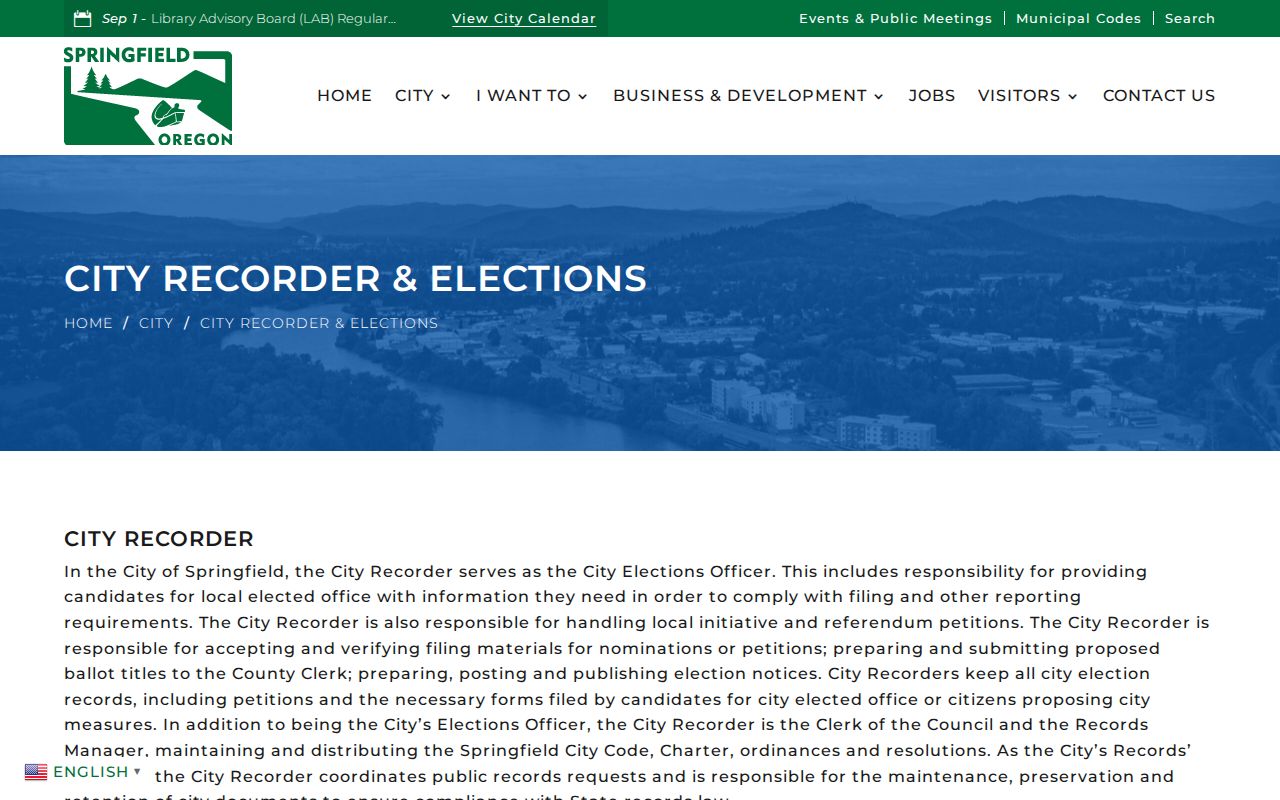
The Recorder accepts online, in-person, mail, and email requests at publicrecords@springfield-or.gov. The office is at 225 Fifth Street in Springfield, phone 541-726-3700. Oregon Public Records Law, ORS chapter 192, sets the response framework. Exemptions and any authorized cost still apply. Separately from any court name search, the Oregon State Police criminal-history request page describes a narrow formal Open Record Request. The request process is its own separate path.
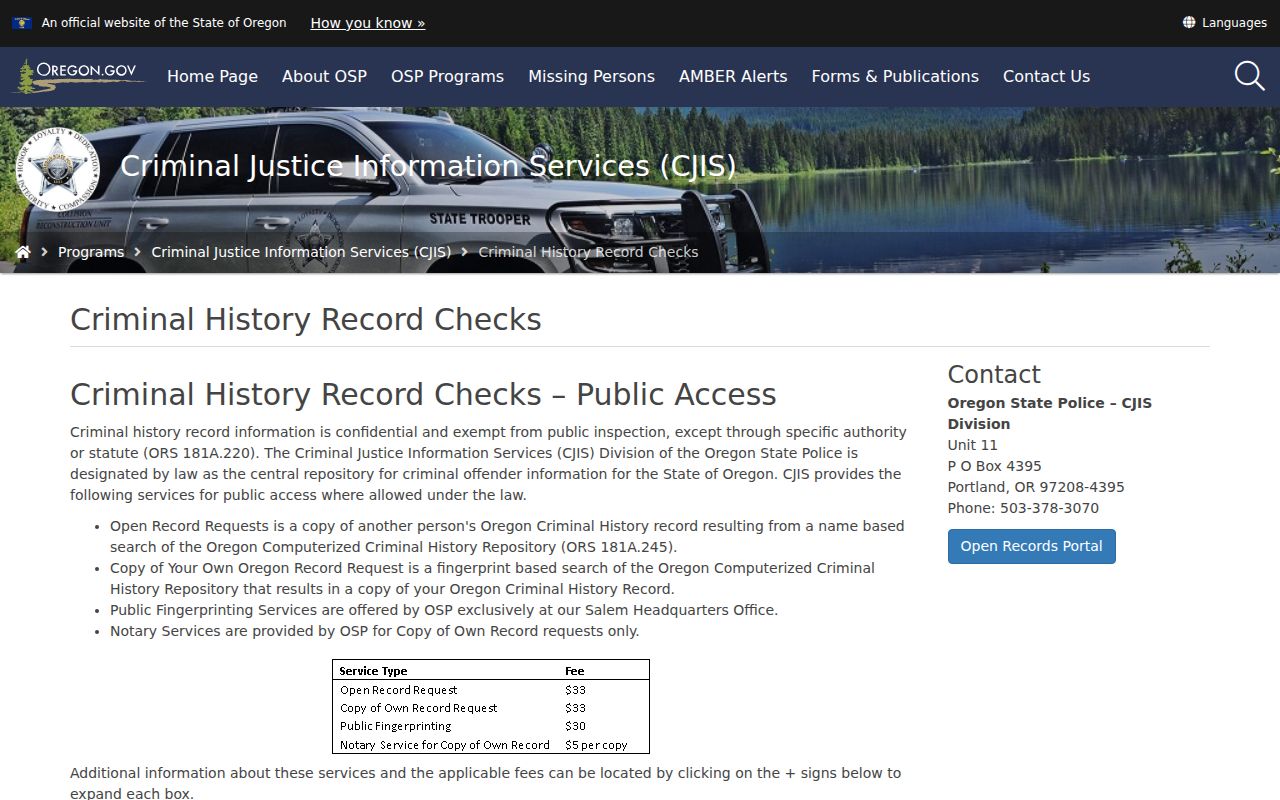
That name-based computerized-history request carries its own confidentiality rules and asks for identifying information to reduce same-name errors. It is not a general resident finder. The Springfield Web Jail Viewer is another limited official display, useful only within a narrow slice of a Springfield records search.
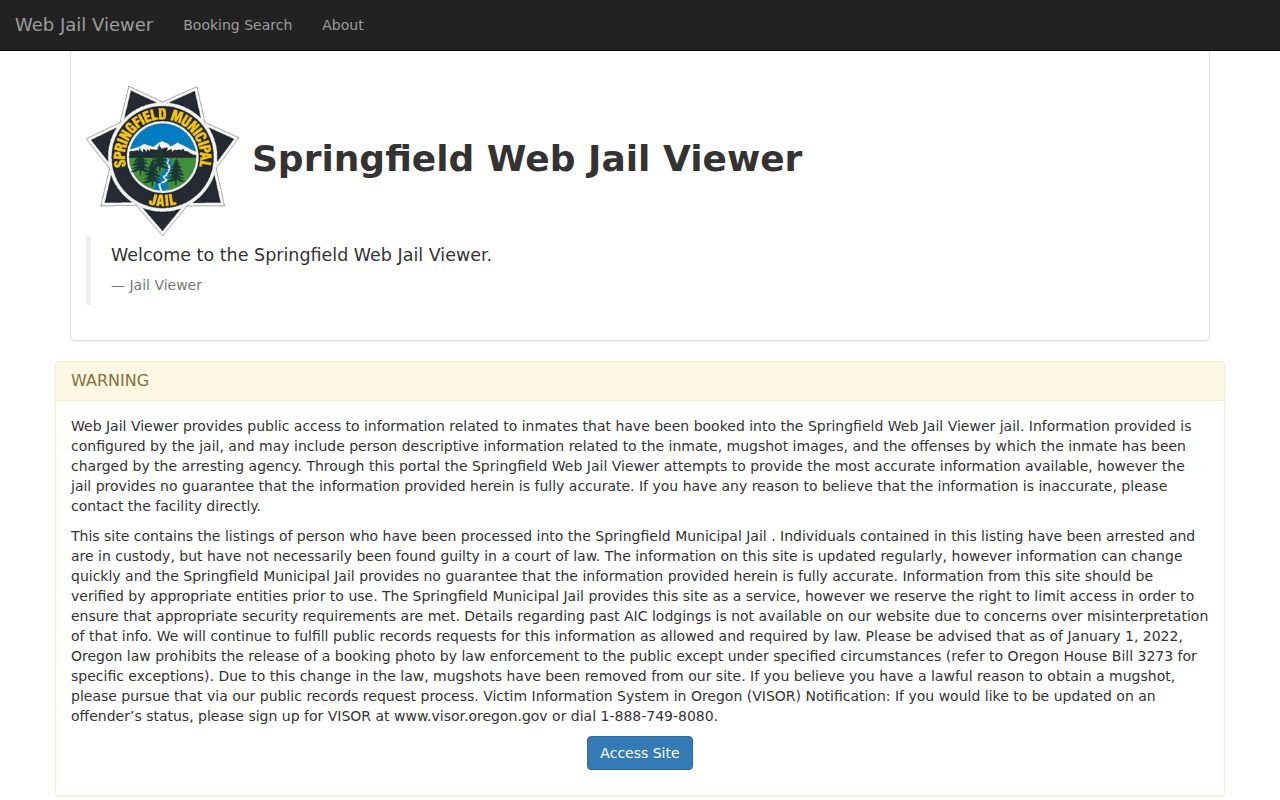
The viewer reports current booking and custody information only, with no prior lodging history online. An arrest, it bears repeating, is not a finding of guilt.
Springfield Vital Record Boundaries
Vital certificates in Oregon work differently from a residents directory lookup. The Oregon Health Authority Center for Health Statistics keeps statewide birth, death, marriage, domestic-partnership, divorce, and dissolution certificates. Birth records turn historic after 100 years. Death, marriage, domestic partnership, divorce, and dissolution records carry a 50-year historic period. Event-date qualifications are set by ORS 432.121 and ORS 432.380. Before a record reaches its historic window, an applicant must qualify. They must show identification and sometimes supply relationship proof or notarized permission.
Ordering runs through several channels. OHA takes online, telephone, mail, drop-box, and scheduled in-person requests. For recent county events, Lane County Vital Statistics handles births and deaths. These cover events from within the previous five months and 28 days. The office sits at 151 W. 7th Avenue, Suite 100-1A, Eugene, phone 541-682-4045. Marriage licenses come from Lane County Clerk, Deeds & Records, while divorce decrees sit with Lane Circuit Court. Historic researchers have another option. The State Archives offers free in-person microfilm and publication viewing. It also provides fee-based research when given a name, event date, city, and county. Its Lane holdings include marriage and divorce indexes. OHRI lists Lane estates from 1852–1937, a strong official lead for heir research.
Note: A historic index gives you a dated lead. The record behind it still follows the keeper's access and copy rules.
My Vote for a Springfield Resident
Oregon My Vote confirms and updates one voter's own registration. It is not an open directory of Springfield residents. It cannot browse a street either. The form asks for a first name, last name, and date of birth before returning anything. Lane County Elections keeps the local voter records at 275 W. 10th Avenue in Eugene, phone 541-682-4234. Formal voter-list requests follow ORS 247.945 and its rules on certification, fees, lawful-use limits, and protected records. The Oregon My Vote form serves an elector's own registration check.
Public voter-list material has legal limits. It never reveals ballot choices. Protected addresses, including those tied to the Address Confidentiality Program or other safety exemptions, must not be reconstructed from other sources.
Springfield Resident Lookup Heir Leads
Estate questions often start with the Oregon Historical Records Index. A result there names the next record to request. Its Lane County coverage includes estates from 1852–1937. It also lists guardianships from 1853–1937, partnerships from 1889–1936, and divorces from 1855–1900. These are index leads, not a complete profile of a person. Keep the date, named party, record group, and county. The archive or court custodian will want them before pulling the underlying material.
Historic newspapers and obituaries offer another dated lead. Always check them against the original source. Springfield Public Library points researchers to Register-Guard material. It also points to University of Oregon collections, State Archives resources, and local-history help. A notice may name a relative, former address, or event. The date and identity still need comparison with a court, archive, or recorded-document source.
Springfield Resident Lookup Privacy Limits
Oregon Public Records Law begins with access. It also carries exemptions in ORS 192.345–192.401. The Oregon Consumer Privacy Act, ORS 646A.570–646A.589, governs covered businesses' personal data on its own terms. It does not change a government custodian's public-record duties. If a record needs correction or redaction, contact the office that created and maintains it, and send private commercial data concerns to that business's privacy process.
Lawful use. Use public Springfield records for lawful personal, family-history, property, or civic research. Oregon law protects confidential data, and using records to stalk, threaten, harass, or harm anyone is prohibited.
Address Confidentiality Program participants may have information withheld. Protected voters get the same shield. A missing result is never permission to assemble private information from other sources. For a full address-based parcel trail, use the Springfield Street Directory instead of treating one name search as a block record.